
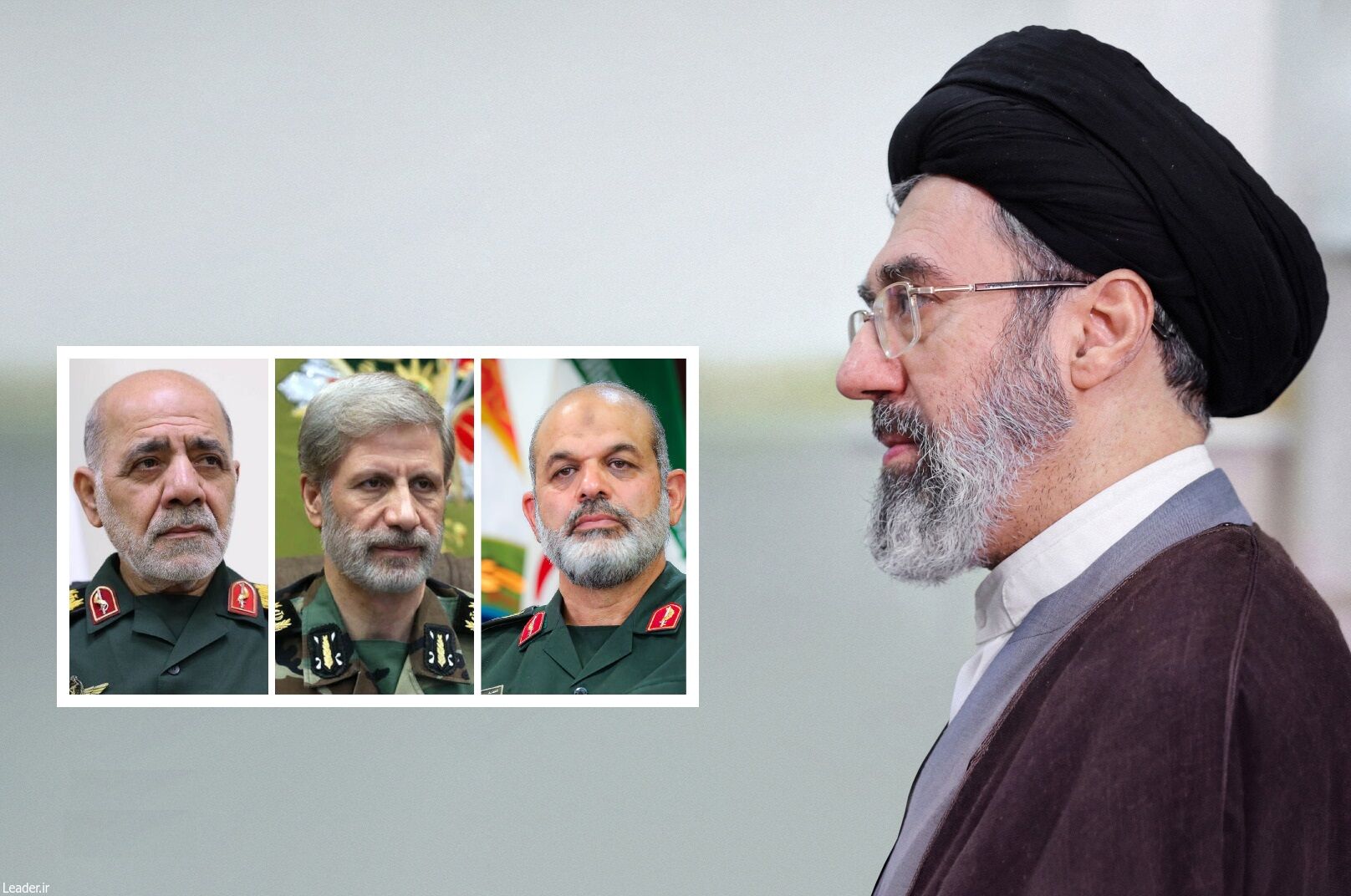
Senior commanders of the armed forces met with Ayatollah Seyyed Mojtaba Khamenei, the Supreme Commander-in-Chief. During the meeting, the Leader of the Revolution noted that one requirement for “maximum deterrence” is “intelligent combat readiness for a powerful confrontation with the enemy”. He ordered that every level and type of threat be met with an immediate, effective response, without geographical restrictions. He said, “If the enemies once again launch military or terrorist attacks, it will be the Armed Forces of the Islamic Republic and the Iranian nation that will determine the time and conditions for ending them.” The Commander-in-Chief also stressed the need to: strengthen the military intelligence architecture; deepen indigenous defence capacity across the doctrinal and tactical domains; and develop state-of-the-art defence and security capabilities using emerging technologies. He further emphasised the need to reinforce spiritual strength and the jihadi spirit, while working tirelessly to meet the livelihood needs of the armed forces and support them.
In another part of the Commander-in-Chief's directives, he ordered that the target database be updated so that all types of material and non-material assets belonging to the American-Zionist enemy would fall within striking range of the Armed Forces.
He described popular support for the armed forces as a pillar of deterrence against anti-Iran foreign elements and their domestic fifth-column forces. He said, “The eight-month presence of the awakened nation in public arenas is a continuation of the eight-year Sacred Defence. Alongside the steadfastness of the military, law enforcement and Basij forces, this presence has protected, and will continue to protect, Iran's territorial integrity and the Islamic system." The Leader of the Islamic Revolution expressed appreciation for the Resistance Front's intelligent steadfastness in various countries. He pointed out that unity across different fronts is a decisive and strategically significant factor in shaping the new political and security order in West Asia, and expressed hope that this new order will increasingly pave the way for the unity of Islamic nations and governments towards the formation of a new Islamic civilisation.
Major General Abdollahi, Chief of the General Staff of the Armed Forces; Major General Hatami, Commander-in-Chief of the Army; and Major General Vahidi, Commander-in-Chief of the Islamic Revolutionary Guard Corps, presented reports during their meeting with the Supreme Leader on the readiness of the country’s defenders along the Persian Gulf coast, in the Strait of Hormuz operational areas, in the Sea of Oman, and along the country’s northwestern and southeastern borders. They also reported increased production of various munitions, including reconnaissance, support, and combat weapons. Expressing his satisfaction with the activities carried out, the Commander-in-Chief asked the senior military commanders to convey his thanks and appreciation to all military, law-enforcement, and Basij personnel; the staff of these organisations; the Ministry of Defence; and their esteemed families.