
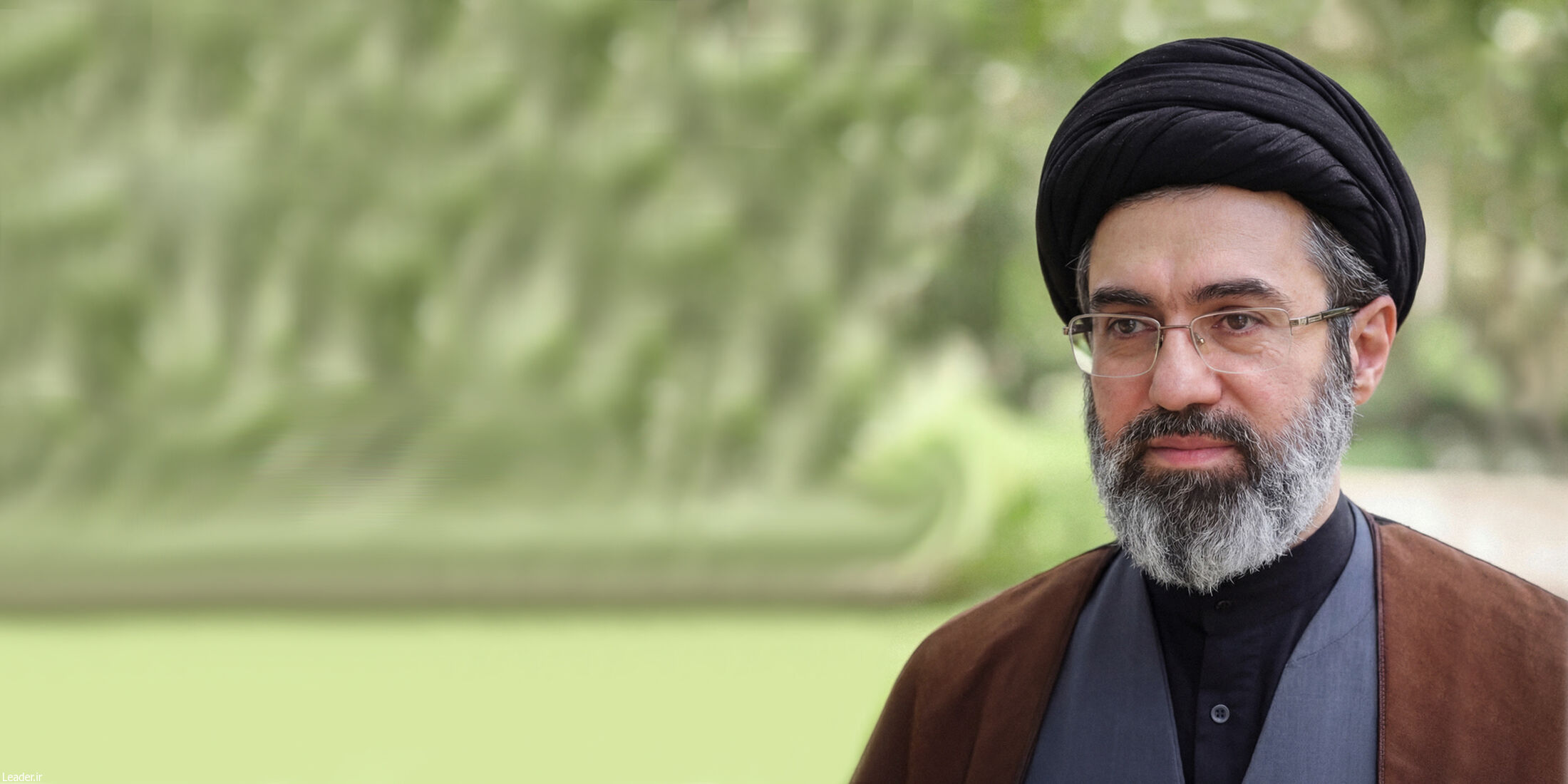
Ayatollah Seyyed Mojtaba Hosseini Khamenei, Leader of the Islamic Revolution, issued a message marking Government Week. In it, he praised the Government’s commendable actions, particularly those of the sincere and caring President. He noted that these efforts were carried out despite restrictions, the schemes of the American-Zionist enemy, and the intensification of sanctions and blockades. He also stressed the need to explain and convey the narrative of Iran's strength and power, highlighting it while avoiding any talk that discourages and weakens national and public morale or engages in "illusory dichotomies". He stated firmly: "I categorically declare that anything harmful to social cohesion is prohibited."
The full text of the Supreme Leader's message is as follows:
In the Name of Allah, the Most Beneficent, the Most Merciful
The first week of Shahrivar each year is an opportunity to review the services the Government of the Islamic Republic of Iran has rendered. This year, the Government of the Islamic Republic of Iran has had the honour of Government Week coinciding with the auspicious and blessed birthdays of the two noble figures in the month of Rabi‘ al-Awwal; may God’s blessings and peace be upon them and their households.
I would like to congratulate and commend all staff and active managers in government bodies, especially the sincere and dedicated President of the Fourteenth Administration. This is particularly so given the commendable measures they have taken under extremely difficult circumstances. During the Third Imposed War and thereafter, the constraints and schemes of the American-Zionist enemy, together with intensified sanctions and blockades, have severely affected the provision of essential goods and services, the repair of important damaged sites, and the management of energy supplies. Despite these obstacles, the Government has continued its efforts in all these areas. It is also fitting that we honour the memory of the martyred Presidents Rajai and Raisi, the martyred Prime Minister Bahonar, martyred staff, managers and ministers across various periods of government, and, above all, the martyred leader of great stature who served as President for nearly two full terms. We ask Allah to elevate their ranks and bestow His divine favour upon them all.
The opportunity to serve the people and fulfil the objectives of the Islamic Republic is a precious blessing we must cherish. In the current period, amid the critical and complex conditions facing the realisation of an ever-stronger Iran, one essential way to achieve this goal, alongside tireless effort and constant innovation, is to explain and convey the power and strength of Iran and its honourable people. There is no need to narrate or highlight weaknesses, flaws, and shortcomings; rather, they require planning and action to resolve them. Sometimes candidly expressing our own weaknesses can greatly assist the enemy when they need a morale boost. It may also create insecurity in the hearts of friends and allies, leaving them bewildered and confused. Of course, such frank discussion is less problematic when only our own people and those who genuinely care about the country hear it. We must, however, openly highlight our strength, power, and achievements, in accordance with the Qur’anic teaching: “And as for the blessing of your Lord, proclaim it.” (Qur’an 93:11).
Our beloved people of Iran have demonstrated their true mettle over the past six months through various forms of struggle (jihad) against the enemy. They have shown it on the front lines through their unity, esprit de corps, and camaraderie. They are entitled to and deserve the services that public institutions and responsible authorities work to provide, and in so doing fulfil the lofty ideals of this sacred system and the noble standing of our nation, which has been appointed to carry out a mission.
Certainly, what follows is already central to this service-oriented government's plans, or at least on its list of objectives. I mention it here simply as a reminder. These include the need to pay serious attention to the interconnected chain of economic and livelihood challenges, such as inflation, unemployment, price management, and the market for goods and services. Particular attention must also be given to other elements in the economic sphere; this would include stimulating growth, increasing investment and directing it towards useful and necessary areas, stimulating production, gradually reducing the dollar’s role as a major instrument of influence, and ultimately making the overall policies of the Resistance Economy the central framework.
The principal key to overcoming these challenges lies in placing ever greater reliance on domestic production. Of course, ensuring an adequate supply of both general and specialised goods is essential. With this in mind, imports should be used only where domestic production is insufficient, and this should be done wisely. Naturally, encouraging production while managing imports and prices can lead to a situation in which the dark blemishes on the country’s economic landscape gradually shrink until they disappear altogether. In this arena, the enemy’s conduct during and after the war has undoubtedly had an impact. Nevertheless, smarter management of the various elements involved can help overcome these challenges. This should include drawing on the public where appropriate, relying on specialists and technologists in other areas, and tapping into new potential. Together, these measures will guide the country towards greater growth and prosperity.
The sworn enemy of this nation seeks to create the impression that the path to prosperity and progress lies in following it and submitting to its unacceptable demands. However, what it has brought to this country and its resources in past eras, even years before the Islamic Revolution, shows the opposite.
Another important issue is making better use of new technologies and the innovative ideas of talented young people. At times, adopting these ideas quickly and moving beyond familiar routines and established habits can lead to major advances in the country’s development. This applies across all areas where national power is applied, including agriculture, industry, culture, education, communications and social affairs.
Above all, the preservation of unity and vigilance to safeguard social cohesion must remain a constant concern for the Government, public officials and all branches of the state.
Another issue, so fundamental that it should always remain the central concern of the Government, public officials, and all branches of the state, is preserving unity and maintaining vigilance to safeguard social cohesion. Every decision, whether cultural, social, political, security-related, or economic, must be assessed for its impact on social cohesion. Some measures may enjoy superficial support among certain sections of society. Yet if they undermine cohesion, or if the safeguards intended to protect unity are neglected in practice, they will harm those very groups and society at large.
There is no doubt that any discouraging talk that weakens national and public morale, or any illusory dichotomisation, such as war versus negotiation, consensus versus confrontation, or compromise versus resistance, which in the past has inflicted direct or indirect damage upon our dear people, will have the same damaging effect going forward. Therefore, I categorically declare that anything harmful to social cohesion is prohibited.
Another important issue is adopting a meta-strategic approach to culture, education, and training. The term “meta-strategic” means shaping all other policies with these considerations in mind. In this regard, special importance must be given to those sections of society that form the foundations of a positive and constructive culture. These include teachers in schools, universities, and Islamic seminaries, as well as nurses and physicians who have dedicated themselves to serving in non-private institutions. Equally important is attention to the role of housewives, who, within the home, teach each child of this land the delicate elements that shape the patterns and designs of a beautiful and desirable culture for the future.
We hope that applying these points, together with the other useful measures that, thank God, are already available in the Government’s programmes, will guide our beloved country towards an ever-stronger Iran. We also hope that those working along this path will become worthy of our Master's special attention (may God Almighty hasten his noble reappearance) and of his prayers for goodness, blessings, and guidance.
Peace be upon you, and the mercy of Allah and His blessings.
Seyyed Mojtaba Hosseini Khamenei
28th Aug. 2026 (6 Shahrivar 1405)